
Right Vibration Testing Equipment for Automotive Application
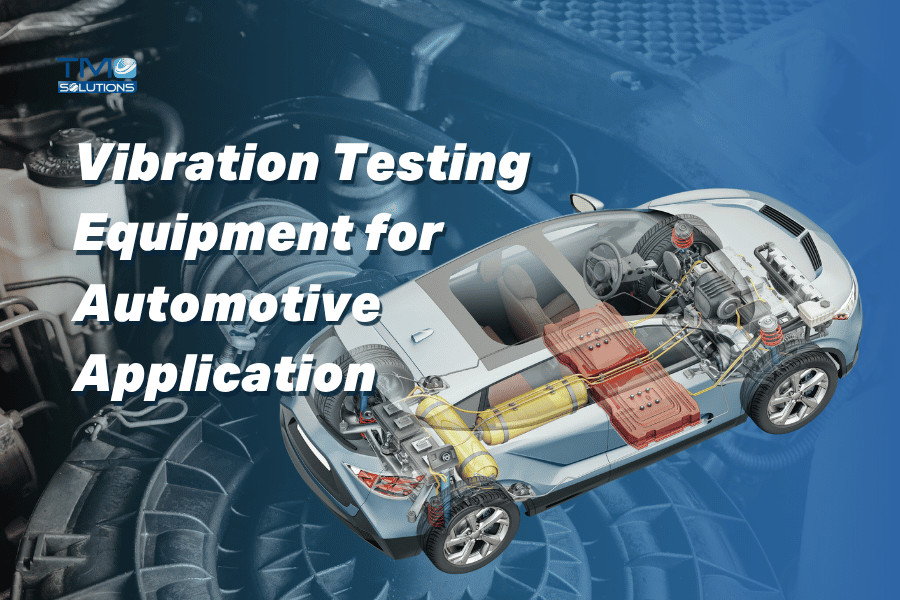
The right vibration testing equipment for automotive applications depends on the part size, payload, frequency range, vibration profile, and test objective.
For heavy assemblies such as EV battery packs, chassis parts, suspension components, and large vehicle structures, a hydraulic vibration shaker is often the right choice because it can generate high force, large displacement, and low-frequency road-load vibration.
For smaller components such as sensors, electronic modules, connectors, and lab-scale samples, a small vibration shaker or modal shaker is usually more suitable.
For sudden impact, transport shock, crash-related pulses, or battery shock validation, engineers may need a shock test system instead of a vibration shaker.
The best system is not selected by industry name alone. It should be selected by the actual test condition the automotive part must survive.
Why Automotive Vibration Testing Needs the Right System
Automotive components do not fail only because of one big impact.
Many failures happen because of repeated vibration, small movements, resonance, fatigue, loose connections, or structural stress over time.
A battery pack may experience vibration from road surfaces.
A sensor may fail because of repeated micro-movement.
A dashboard assembly may rattle because one mounting point behaves differently under dynamic load.
A suspension component may pass a static load test but still fail under repeated vibration.
This is why automotive vibration testing equipment must do more than “shake the product.” It must reproduce the right vibration condition with enough control, force, displacement, and repeatability to reveal real weaknesses before the product reaches the road.
For automotive and EV testing, the most important question is not: “What vibration machine do we need?”
A better question is: “What real-world condition are we trying to reproduce?”
Common Automotive Parts That Need Vibration Testing
Automotive vibration testing is used across many areas of vehicle development and validation, including:
Battery enclosures and mounting systems
Engine components
Exhaust systems
Suspension parts
Chassis structures
Dashboards and interior assemblies
ECUs and electronic modules
Sensors and connectors
Lighting systems
Infotainment units
Packaging and transport protection
Vehicle-mounted equipment
Heavy vehicle and off-road components
Each part may need a different test system.
A small sensor does not need the same equipment as a full battery pack.
A high-frequency electronics test is different from low-frequency road-load simulation.
A drop or impact test is different from continuous vibration.
This is where system selection matters.

Comparison Table: Which Automotive Vibration Testing Equipment Should You Choose?

1. Hydraulic Shaker Systems for Heavy Automotive Testing
For many automotive and EV applications, the most suitable equipment is a hydraulic vibration shaker.
This is especially true when the test involves:
Large payloads
Low-frequency vibration
Long displacement
High force
Road-load simulation
Heavy structural parts
Battery pack durability testing
Transport and operational vibration profiles
A hydraulic shaker uses hydraulic force and servo control to generate controlled vibration. This makes it suitable for heavier components that require more force than a small electromagnetic shaker can provide.
For automotive teams, this matters because many vehicle components are large, heavy, and mechanically complex.
Examples include:
EV battery packs
Battery trays
Chassis frames
Suspension assemblies
Heavy brackets
Vehicle-mounted equipment
Truck and off-road vehicle components
When to Use This System
Use a hydraulic shaker system when:
The specimen is too heavy for a small vibration shaker
The test requires strong low-frequency vibration
The test needs large displacement or long stroke
The profile is based on road vibration or transport vibration
The product must be validated for durability over repeated cycles
The test setup requires a large table or custom fixture
The application involves EV battery packs or structural automotive parts
2. Small Vibration Shakers for Automotive Electronics and Sensors
Not every automotive test requires a large hydraulic system.
Many automotive parts are small but highly sensitive.
For example:
Sensors
Electronic control modules
Connectors
PCB assemblies
Relays
Small brackets
Compact mechanical components
These parts may need controlled vibration testing to check whether they can withstand repeated mechanical stress, connector movement, solder joint fatigue, mounting weakness, or resonance.
For this type of work, a smaller vibration shaker can be more practical.
It gives engineers a controlled test setup without oversizing the system.
When to Use This System
Use a small vibration shaker when:
The test specimen is small or lightweight
The test is performed in a lab environment
The goal is component-level validation
The application involves sensors, electronics, or small assemblies
The test does not require very high force or large displacement
Engineers need repeatable vibration input for design validation
3. Modal Shakers for Resonance and Structural Analysis
Automotive vibration problems are not always about strength.
Sometimes the problem is resonance.
A component may pass a basic durability test but still create noise, vibration, fatigue, or instability when it reaches a certain frequency.
This is common in:
Brackets
Panels
Frames
Lightweight structures
Mounted electronics
Interior assemblies
Sensor housings
Support structures
A modal shaker helps engineers study how a structure responds to vibration.
Instead of simply checking whether a part survives, modal testing helps answer deeper engineering questions:
What are the natural frequencies of this part?
Where are the mode shapes?
Which area is moving more than expected?
Is the mounting design creating a vibration problem?
Could this structure amplify vibration in real vehicle conditions?
This is valuable for design improvement before durability testing.
When to Use This System
Use a modal shaker when:
You need to identify resonance behavior
You are studying structural vibration response
The goal is design optimization, not only pass/fail validation
The test involves lightweight structures or subassemblies
Engineers need data for modal analysis, NVH investigation, or fatigue prevention
4. Shock Test Systems for Automotive Impact and Battery Safety
Vibration testing and shock testing are related, but they are not the same.
Vibration testing checks how a product performs under repeated dynamic motion.
Shock testing checks how a product responds to a sudden mechanical event.
In automotive and EV applications, shock testing may be required for:
Battery cells
Battery modules
Battery packs
Electronic modules
Connectors
Mounted components
Transport impact
Handling impact
Crash-related mechanical stress
Sudden road impacts
For EV batteries, this becomes especially important because mechanical shock can affect safety-critical areas such as cell structure, tabs, internal connections, enclosure integrity, and mounting stability.
A shock test system can generate controlled pulse shapes such as half-sine, trapezoidal, sawtooth, or SRS profiles, depending on the standard or customer requirement.
When to Use This System
Use a shock test system when:
The test requirement includes sudden impact or acceleration
The standard specifies a shock pulse
The product is a battery cell, module, or pack
The component must survive transport or handling impact
The failure mode is related to cracking, separation, loosened mounting, or internal mechanical damage
The requirement is not continuous vibration but a short-duration mechanical event
5. Drop Test Systems for Automotive Packaging and Transport Validation
Automotive parts often travel through complex supply chains before reaching the assembly line, service centre, or final customer.
A part may be well designed, but still arrive damaged because the packaging failed.
This is especially relevant for:
Automotive electronics
Replacement parts
Sensors
Lighting components
Precision assemblies
Battery-related components
Export packaging
Heavy or fragile parts
A drop test system helps engineers and packaging teams evaluate whether the product and packaging can withstand real handling conditions.
This is not only about preventing cosmetic damage. It is about protecting function, safety, and reliability after transport.
When to Use This System
Use a drop test system when:
The main risk is logistics or handling damage
The product is shipped as a spare part or packaged component
Packaging cushioning must be validated
The test requirement includes drop orientation, drop height, or impact surface
The goal is to reduce transport damage, warranty claims, or customer complaints
How to Choose the Right Automotive Vibration Testing Equipment
Before choosing equipment, define the test requirement clearly.
A good selection process should include these questions:
1. What are you testing?
Start with the product type.
A sensor, ECU, battery pack, suspension component, and chassis assembly all need different test setups.
The size, mass, mounting points, and stiffness of the test article affect system selection.
2. What real-world condition are you simulating?
Automotive components may face:
Road vibration
Engine vibration
Transport vibration
Handling shock
Crash-related impact
Repeated fatigue loading
Resonance
Drop impact
Long-term durability cycles
The equipment must match the condition.
3. What is the payload?
Payload is one of the biggest selection factors.
A small shaker may be suitable for sensors and electronics, but not for EV battery packs or chassis parts.
Heavy payloads usually require hydraulic systems with large table capacity and high force output.
4. What frequency range is needed?
Different automotive tests require different frequency behavior.
Small electronic components may need higher-frequency vibration.
Heavy structures often require lower-frequency, high-displacement motion.
The wrong system can create an unrealistic test or fail to reproduce the required profile.
5. What displacement or stroke is required?
Road-load and structural tests often need more displacement.
This is one of the reasons hydraulic systems are commonly used for large automotive durability testing.
6. What waveform or profile is required?
Automotive tests may involve:
Sine vibration
Random vibration
Road spectrum profiles
Shock pulses
Field data replay
Resonance search and dwell
Custom durability profiles
The controller and system configuration must support the required waveform.
7. Is a fixture required?
Fixtures are critical in automotive vibration testing.
A good test system can still produce poor results if the fixture is weak, unrealistic, or introduces unwanted resonance.
Fixture design should consider:
Mounting orientation
Boundary conditions
Stiffness
Mass distribution
Safety
Access for sensors and cables
Repeatability between tests
8. Will the system need future flexibility?
Automotive programs change.
A lab may start with one battery module, then later test full packs.
A supplier may begin with sensors, then expand into larger assemblies.
This is why future test needs should be discussed before equipment selection.
Real Application Example: EV Battery Pack Vibration Testing
An EV battery manufacturer needs to validate a large battery pack before production release.
The pack is heavy, mounted under the vehicle, and exposed to vibration from road surfaces, acceleration, braking, cornering, and transport.
The engineering team needs to answer practical questions:
Will the battery housing remain structurally stable?
Will mounting points loosen?
Will internal modules remain secure?
Will connectors or busbars experience fatigue?
Will the pack remain safe after repeated vibration?
Can the test reproduce low-frequency road vibration realistically?
A small vibration shaker would not be suitable because the payload is too large and the required vibration condition involves high force and low-frequency displacement.
A hydraulic vibration shaker would be more appropriate because it can support heavier payloads, larger test tables, long-stroke movement, and road-spectrum vibration profiles.
For this type of application, TMC’s HS Series Hydraulic Shaker System would be the relevant product category to evaluate.
If the same battery program also requires sudden mechanical impact validation, the engineering team may also need a shock test system for battery shock testing.
This is why automotive testing equipment selection often involves more than one system. Vibration, shock, drop, and motion are different mechanical events, and each requires the right equipment.
FAQ: Automotive Vibration Testing Equipment
-
The right equipment depends on the component size, payload, frequency range, displacement, and test objective. Heavy automotive assemblies such as EV battery packs, suspension parts, and chassis components often require hydraulic vibration shakers. Smaller parts such as sensors, connectors, and electronic modules may use small vibration shakers or modal shakers.
-
Use a hydraulic shaker when the test involves heavy payloads, high force, low-frequency vibration, large displacement, or road-load simulation. Hydraulic shaker systems are commonly used for EV battery packs, chassis structures, suspension assemblies, and heavy vehicle components.
-
A small vibration shaker may be enough for sensors, electronic assemblies, small brackets, connectors, and lab-scale components. It is usually not suitable for large battery packs, chassis assemblies, or heavy structures that require high force and long-stroke vibration.
-
Vibration testing simulates repeated dynamic motion over time. Shock testing simulates sudden mechanical impact or acceleration. Automotive products may need both, especially EV batteries, electronics, and mounted components exposed to road vibration, handling impact, or crash-related mechanical stress.
-
EV battery vibration testing often requires a hydraulic vibration shaker because battery packs are heavy and may need low-frequency, high-force, road-spectrum vibration profiles. Battery shock testing may also require a dedicated shock test system depending on the applicable standard.
-
Fixture design affects test accuracy, repeatability, and safety. A poor fixture can introduce unwanted resonance, change the boundary condition, or produce results that do not represent real vehicle installation. The fixture should match the actual mounting condition as closely as possible.
-
Usually not. Automotive testing may require different systems for different conditions. A hydraulic shaker may be needed for heavy vibration testing, a small shaker for electronics, a modal shaker for resonance analysis, a shock test system for sudden impact, and a drop tester for logistics validation.
-
Engineers should prepare the product weight, dimensions, mounting orientation, required test standard, waveform, frequency range, acceleration level, displacement requirement, number of axes, fixture needs, and future test expansion plans.
Final Recommendation
Choosing the right vibration testing equipment for automotive applications starts with the test condition, not the machine.
If the requirement is heavy payload, low-frequency vibration, and road-load simulation, start with a hydraulic shaker.
If the requirement is small component validation, consider a small vibration shaker.
If the goal is resonance analysis, use a modal shaker.
If the requirement is sudden impact or battery shock validation, use a shock test system.
If the risk is transport or handling damage, use a drop test system.
Every automotive component has a different failure mode. The right system is the one that reproduces that failure condition accurately, safely, and repeatably.
Get a system recommendation from our engineering team.