Hydraulic Vibration Shaker Systems for Heavy Testing
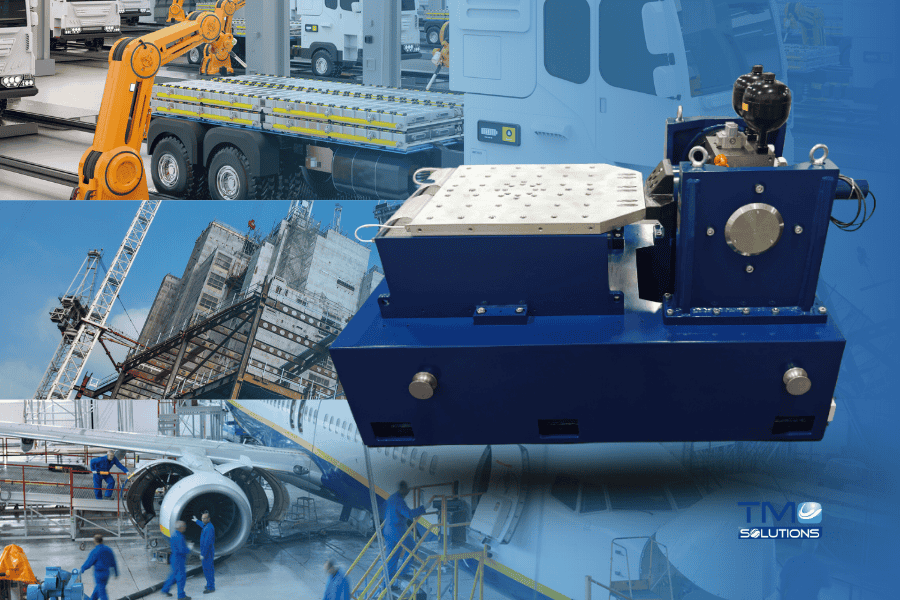
Hydraulic Vibration Shaker Systems: Precision Testing for High-Mass Structures and Real-World Load Simulation
Why Hydraulic Shakers Are Essential in Modern Reliability Testing
In industries such as aerospace, automotive, rail transportation, civil engineering, and energy systems, many components operate under high-force, low-frequency vibration environments that cannot be realistically reproduced using electrodynamic shakers. Servo-hydraulic vibration shaker systems are designed specifically for these demanding conditions, delivering high displacement, high payload capacity, and strong excitation force to simulate real operational stresses.
Hydraulic shaker technology is particularly suitable for:
Large structural assemblies
Vehicle subsystems and battery packs
Railway and infrastructure components
Defense and heavy machinery testing
Seismic simulation and durability validation
When test objectives involve large payloads and long-stroke vibration, hydraulic systems provide a more accurate representation of real-world conditions.
How Hydraulic Vibration Shaker Systems Work
Hydraulic shakers use servo-controlled hydraulic actuators driven by high-pressure oil supplied from a hydraulic power unit. The servo valve regulates oil flow to the actuator, enabling highly controlled motion that reproduces programmed vibration waveforms such as:
Sine vibration
Random vibration
Road-load simulation
Multi-axis excitation (with advanced configurations)
Because hydraulic systems generate force through fluid pressure rather than electromagnetic motion, they achieve very high force output and displacement capability, making them ideal for testing heavy structures that cannot be handled by traditional vibration platforms.
Key Advantages of Modern Hydraulic Shaker Systems
1. High Force Output for Large Payload Testing
Hydraulic vibration systems can handle very large test masses, enabling engineers to validate full assemblies rather than isolated components. This produces more realistic durability and reliability data.
2. Long Stroke Capability
Large displacement capability allows accurate reproduction of low-frequency vibration environments, including transportation, seismic, and heavy-equipment operating conditions.
3. Realistic Structural Simulation
Hydraulic actuation can reproduce complex field-measured vibration profiles, helping engineers validate performance under actual operating conditions rather than simplified laboratory assumptions.
4. Flexible Test Integration
Hydraulic shaker platforms can be integrated with:
Environmental chambers
Multi-axis test rigs
Structural test frames
Battery safety testing systems
This enables combined testing scenarios such as temperature-vibration or vibration-load coupling, improving reliability validation accuracy.
Typical Engineering Applications
Hydraulic vibration shaker systems are widely used for:
Automotive & EV Engineering
Battery pack vibration durability testing
Chassis and suspension durability validation
Vehicle subsystem structural reliability testing
Rail & Transportation
Rail equipment vibration certification
Transportation simulation for large cargo systems
Aerospace & Defense
Structural vibration endurance testing
Missile, aircraft, and defense equipment durability validation
Civil & Infrastructure
Seismic response simulation
Structural fatigue testing of large mechanical assemblies
Engineering Considerations When Selecting a Hydraulic Shaker
Choosing the right system requires evaluating:
Maximum payload capacity
Required force output
Frequency range and displacement
Control system waveform capability
Multi-axis expansion requirements
Integration with environmental testing systems
A properly configured hydraulic shaker ensures the system replicates true service conditions, enabling engineers to detect design weaknesses before deployment.
TMC Hydraulic Shaker Engineering Approach
TMC hydraulic vibration shaker systems are engineered to support high-force durability testing, large payload applications, and customizable test configurations tailored to customer requirements. Systems can be configured for:
Large structural vibration testing
EV battery durability validation
Transportation and seismic simulation
Integrated environmental and vibration testing
With advanced servo-hydraulic control technology and precision feedback systems, TMC solutions provide stable waveform control, repeatable excitation, and scalable testing platforms suitable for research, certification, and production validation environments.
Frequently Asked Engineering Questions
What is the difference between hydraulic and electrodynamic shakers?
Hydraulic shakers provide higher force and larger displacement, making them suitable for heavy payloads and low-frequency testing, while electrodynamic shakers are optimized for high-frequency applications.
When should engineers choose a hydraulic vibration shaker?
Hydraulic systems are preferred when testing involves large structures, high-force excitation, or long-stroke vibration requirements such as seismic or transportation simulation.
Can hydraulic shaker systems support environmental testing?
Yes. Hydraulic shakers can be integrated with environmental chambers to perform combined vibration-temperature reliability testing.
Conclusion
As products become larger, heavier, and more complex—especially in EV, transportation, and infrastructure sectors—servo-hydraulic vibration testing plays a critical role in ensuring structural reliability and safety. Selecting a properly engineered hydraulic shaker platform enables engineers to perform real-world durability validation, reduce field failures, and accelerate product qualification cycles.