
Waveform Generators for Shock Test Machines

A waveform generator is the part of a shock test machine that helps create the required shock pulse shape during mechanical shock testing.
The three common waveform generator types are half-sine waveform generators, sawtooth waveform generators, and trapezoidal waveform generators.
Each generator is used to simulate a different shock condition, such as elastic collision, high-frequency impact, sustained acceleration, explosion shock, transport impact, or aerospace and defence shock environments.
Choosing the right waveform generator depends on the product being tested, the required shock standard, the acceleration level, pulse duration, waveform shape, and the failure mode engineers need to evaluate.
For accurate shock testing, the waveform generator should be selected together with the shock machine, fixture, payload, controller, and measurement system.
What Is a Waveform Generator in a Shock Test Machine?
A waveform generator is installed on the anvil or impact area of a shock test machine. When the shock table drops or impacts the generator, the material and structure of the generator help form the required shock pulse.
In simple terms, the waveform generator controls how the impact energy is transferred to the test specimen.
Without the correct waveform generator, the shock machine may not produce the pulse shape required by the test standard or real application.
In mechanical shock testing, engineers usually need to control:
Peak acceleration
Pulse duration
Pulse shape
Shock direction
Energy transfer
Frequency content
Repeatability
Secondary shock behaviour
Test severity
This is why waveform generator selection is not a small detail. It directly affects the quality, accuracy, and usefulness of the shock test result.
Why Waveform Shape Matters in Shock Testing
Different products fail in different ways under shock.
A consumer electronic product may fail because of a solder crack or loose connector.
A battery module may fail because of internal movement, enclosure deformation, or mounting weakness.
An aerospace component may fail because high-frequency shock excites local resonance.
A packaged product may fail because the impact condition does not match the real drop or handling environment.
The waveform shape determines what type of stress is applied to the product.
A half-sine wave is smooth and widely used for general shock testing.
A sawtooth wave has stronger high-frequency content and can excite multiple local resonances.
A trapezoidal wave applies a more sustained high-acceleration load during the flat-top section.
For engineers, choosing the right waveform is not only about meeting a standard. It is about making sure the test reproduces the right mechanical condition.
Main Types of Waveform Generators
The three main waveform generator types used in shock test machines are:
Half-sine waveform generator
Lead sawtooth waveform generator
Pneumatic squarewave or trapezoidal waveform generator
Each type has a different purpose, operating method, and application range.
Comparison Table: Shock Waveform Generator Types
| Waveform Generator Type | Typical Waveform | Main Purpose | Common Applications | Key Advantage | Main Consideration |
|---|---|---|---|---|---|
| Half-sine waveform generator | Smooth symmetrical pulse | General shock testing and elastic collision simulation | Electronics, packaging, automotive parts, general product reliability | Widely used, practical, easier to implement | May not fully represent high-frequency or extreme shock events |
| Lead sawtooth waveform generator | Terminal peak sawtooth pulse | Severe shock testing with rich high-frequency energy | Aerospace, defence, strict reliability testing | Strong excitation of local resonances | Lead modules require preparation, melting, reuse, and careful handling |
| Pneumatic squarewave / trapezoidal generator | Rapid rise, flat-top hold, rapid fall | Sustained high-acceleration shock simulation | Aerospace, defence, structural strength testing, explosion-related conditions | Applies strong sustained force over a defined duration | Less common and requires specific setup, such as nitrogen supply |
1. Half-Sine Waveform Generator
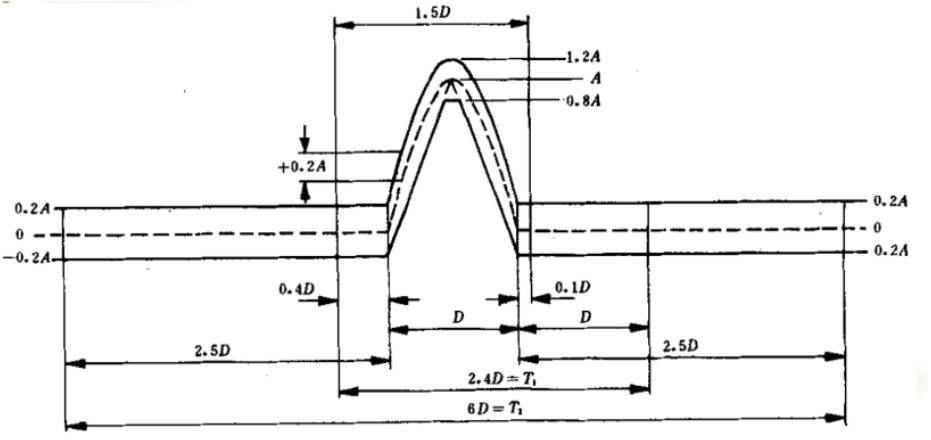
The half-sine waveform generator is the most common waveform generator used in shock test machines.
It produces a smooth and symmetrical pulse that rises from zero to peak acceleration and then returns to zero.
This waveform is widely used because it can simulate many common shock events, including elastic collision, free-fall impact, transport impact, and general handling shock.
Half-sine waveform generators are commonly used for:
Electronic products
Consumer devices
Automotive components
Industrial equipment
Packaging validation
General mechanical shock testing
Product reliability testing
Transportation impact simulation
Wool Felt and Elastomer Pads

Half-sine waveform generators are commonly created using wool felt or elastomer pads.
Wool felt is often used because it is practical, cost-effective, and easy to replace. It also supports fine adjustment of pulse width and is suitable for narrower pulse width testing.
However, after repeated shocks, wool felt may become harder. It can also get dirty or shed fibres after long-term use.
One whole set of wool felt includes 40 pcs - 10/5/2/1mm x10 pcs
Elastomer pads can generate a better waveform shape and a wider pulse duration range. They are available in different stiffness levels, allowing engineers to adjust the shock response more effectively.
Generally there are three kinds of elastomer pads – green, red and yellow.
One whole set of elastomer pad includes 8 pcs (15mm+25mm+45mm) RED; (15mm+25mm+45mm) YELLOW; (25mm+45mm) GREEN.
| Module Description | Maximum Force | Module Stiffness |
|---|---|---|
| Yellow | 134,885 lbf (600kN) | 85~95 Durometer |
| Red | 89,923 lbf (400kN) | 60~70 Durometer |
| Green | 22,480 lbf (100kN) | 30~40 Durometer |
If the above force limit is exceeded, the elastomer modules will begin to break down
A practical selection approach is:
For smaller shock tables, wool felt may be sufficient.
For medium table sizes, a combination of wool felt and elastomer pads may provide better waveform control.
For larger shock tables, multiple sets of wool felt and elastomer pads may be needed to support a wider range of test conditions.
Advantages and Disadvantages of Wool Felt and Elastomer Pads
| Advantage | Disadvantage | |
|---|---|---|
| Wool felt | 1.Easy to replace
2.Longer service life 3.Fine adjustment of pulse width 4.Support narrow pulse width testing 5.Cheaper |
1.After too many shocks, the wool felt will become harder and harder
2.Narrow pulse width of the waveform 3.Easy to get dirty and shed fibers after long-time use |
| Elastomer pad | 1.Better waveform shape | 1.More expensive
2.Fixed pulse width range 3.Begin to break down if force limit is exceeded |
When to Use a Half-Sine Waveform Generator
Use a half-sine waveform generator when:
The test requires a standard mechanical shock pulse.
The product is exposed to common handling or transport impact.
The goal is to evaluate overall structural strength.
The test standard specifies a half-sine pulse.
The specimen is an electronic product, packaged product, automotive component, or industrial part.
The test needs practical and repeatable shock generation.
Recommendations
Each shock machine shall be equipped with at least one set of wool felt;
When shock machine table size≤600mm, choosing wool felts is enough; if customer wants better profile, elastomer pads can be chosen;
When table size is 700mm and 800mm, it is suggested to choose one set of wool felts + two sets of elastomer pads;
When table size is above 1000mm, it is suggested to choose two sets of wool felts + four sets of elastomer pads.
Half-sine shock testing is often a good starting point for general product reliability validation.
2. Lead Sawtooth Waveform Generator
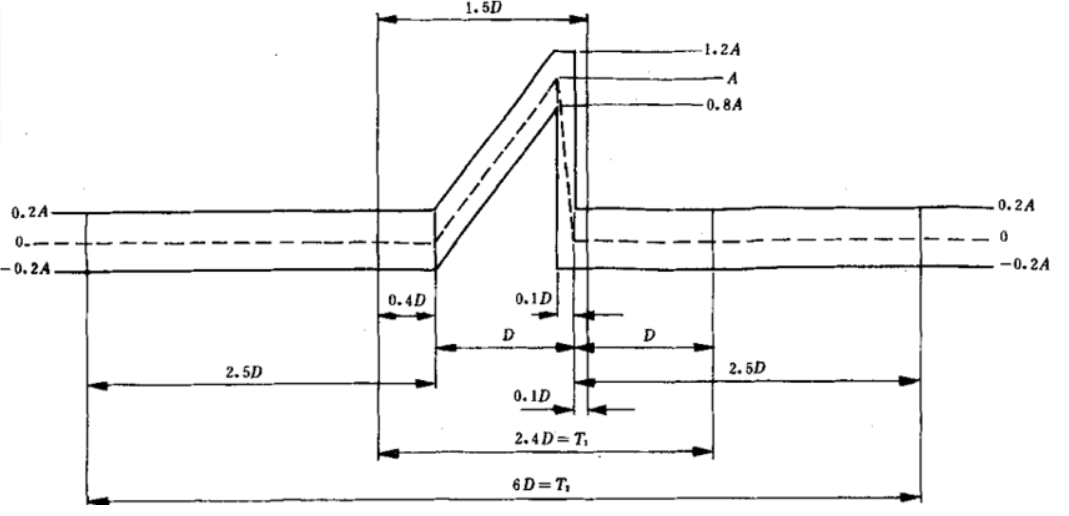
The lead sawtooth waveform generator is the next common one and is used to create a terminal peak sawtooth shock pulse.
A terminal peak sawtooth waveform rises linearly and then drops sharply at the end of the pulse. Compared with a half-sine pulse, it is more asymmetrical and contains richer high-frequency energy.
This makes sawtooth shock testing useful when engineers need to excite multiple local resonances in the product.
Sawtooth waveform generators are commonly used for more demanding applications, including:
Aerospace components
Defence equipment
Military electronics
High-reliability products
Structural response testing
Strict shock qualification programs
Products sensitive to resonance
How Lead Sawtooth Generators Work
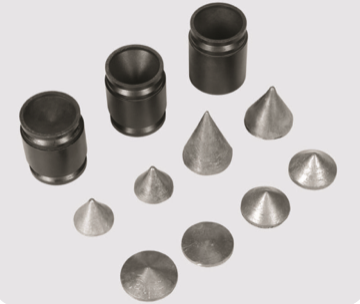
Lead sawtooth generators are usually prepared using lead modules and lead weights. The lead is melted and poured into modules to form the required generator shape.


During the shock test, the generators are placed symmetrically on the anvil. The shock table impacts the generators to create the sawtooth pulse.
After each shock, the lead generators are flattened. The used lead must be collected, melted again, and prepared for reuse.
This makes sawtooth generator use more labour-intensive than half-sine generator use, but it can provide the severe shock conditions needed for demanding applications.
One set of sawtooth generator includes 5 pcs of modules compatible with 9 types of lead weights (Four pieces of them both ends are usable), 10 pcs for each of the 9 types of lead weights, a bar of lead weighting 10kg approx. And a set of casting tools.
Why Sawtooth Shock Is More Severe
The terminal peak sawtooth waveform has a wide frequency spectrum and stronger high-frequency content.
This means it can excite more local resonances in the product.
For aerospace and defence components, this is important because real shock environments may include high-frequency transient energy that a simple half-sine pulse may not fully represent.
When to Use a Lead Sawtooth Waveform Generator
Use a lead sawtooth waveform generator when:
The test requires a terminal peak sawtooth pulse.
The product must be evaluated under severe shock conditions.
High-frequency excitation is important.
The application involves aerospace, defence, or military standards.
The goal is to expose local resonance or hidden structural weakness.
The product is safety-critical or mission-critical.
The test requirement is more demanding than a general half-sine shock test.
Recommendations:
One set of lead sawtooth generator is suggested regardless the vertical shock machine model.
For horizontal shock tester, if customer needs this kind of generator, please consult TMC.
Sawtooth shock testing is often suitable when the objective is rigorous validation, not only general impact resistance.
See also Sawtooth Wave Testing for Product Durability
3. Pneumatic Squarewave or Trapezoidal Waveform Generator
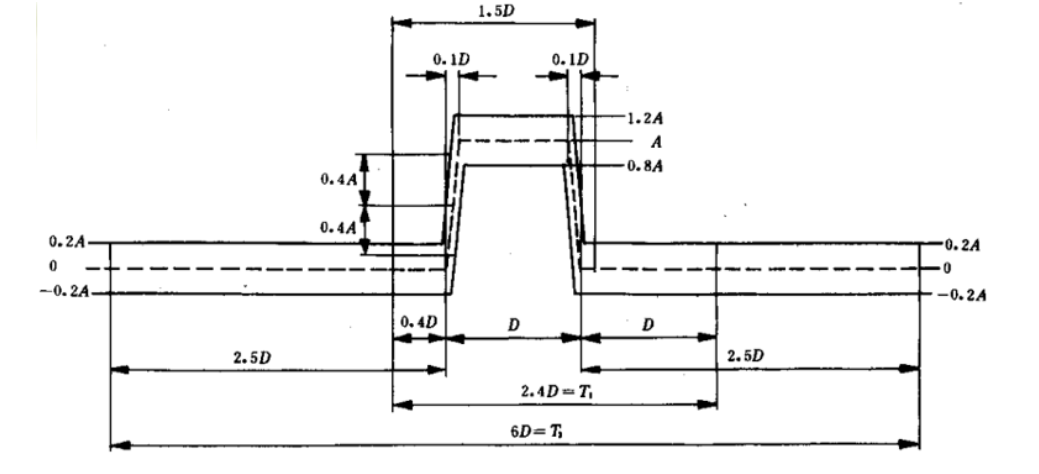
The pneumatic squarewave generator is the least common used generator and is used to produce a trapezoidal shock waveform.
A trapezoidal wave has a rapid rise, a flat-top hold section, and a rapid fall. During the flat-top section, the product is exposed to sustained high acceleration for a defined period.
This waveform is useful when engineers need to simulate an intense and sustained force rather than a short elastic impact.
Trapezoidal shock testing is commonly used for:
Structural strength testing
Aerospace components
Defence applications
Explosion-related simulation
Sustained overload testing
Launch-related conditions
Explosive bolt initiation simulation
High-force mechanical validation
How Pneumatic Squarewave Generators Work
Pneumatic squarewave generators require a dedicated setup. In many cases, the operator needs a nitrogen cylinder connected to the generator.
This generator type is less common than half-sine and sawtooth generators, but it is important for specific applications where a flat-top acceleration pulse is required.
Because trapezoidal shock testing requires careful setup and compatibility with the shock machine, engineers should confirm the shock tester model, table size, pulse requirement, and application before selecting this generator.
Why Trapezoidal Shock Is Important
The flat-top section of a trapezoidal waveform means the product experiences sustained high acceleration.
This is different from a half-sine wave, where the product reaches peak acceleration only briefly.
For some aerospace, defence, and structural applications, sustained acceleration is more representative of the actual mechanical event.
When to Use a Pneumatic Squarewave or Trapezoidal Generator
Use a pneumatic squarewave or trapezoidal generator when:
The test requires a trapezoidal waveform.
The product must be exposed to sustained high acceleration.
The application involves explosion simulation, launch conditions, or extreme overload.
The goal is to test structural strength under prolonged force.
The test standard specifies a squarewave or trapezoidal pulse.
The product is used in aerospace, defence, or other high-reliability environments.
The shock machine is compatible with the generator setup.
| Recommendations | |||
|---|---|---|---|
| Model | Table Size | Size | Qty |
| VASII | ≤600mm | Small | 2 |
| 700&800mm | Medium | 1 | |
| 900mm | Large | 1 | |
| 1000mm | Medium | 2 | |
| ≥1200mm | Medium | 4 | |
| MS | ≤350mm | Small | 1 |
| 400-800mm | Medium | 1 | |
| 900mm | Large | 1 | |
| 1000mm | Medium | 2 | |
| ≥1200mm | Medium | 4 | |
For other vertical shock testers, it is not suggested to use squarewave generator;
For horizontal shock tester, if customer needs this kind of generator, please consult TMC.
Trapezoidal waveform testing is not the most common shock test, but it can be critical when the product must survive sustained high-force conditions.
Shock Waveform Characteristics Compared
| Characteristic | Half-Sine Wave | Terminal Peak Sawtooth Wave | Trapezoidal Wave |
|---|---|---|---|
| Waveform shape | Smooth and symmetrical | Linear rise with sharp drop | Rapid rise, flat-top hold, rapid fall |
| Peak position | Middle of the pulse | End of the pulse | Across the flat-top section |
| Symmetry | Fully symmetrical | Asymmetrical | Generally symmetrical and adjustable |
| Energy behaviour | Medium and low-frequency energy | Wide frequency spectrum with rich high-frequency energy | Strong energy applied over sustained acceleration |
| Typical severity | Medium | Very severe for resonance excitation | Strong for structural overload |
| Common use | General shock and packaging tests | Aerospace, defence, strict qualification | Explosion, launch, sustained overload simulation |
| Typical failure modes revealed | General structural weakness, packaging failure | Local resonance, solder fatigue, connector weakness, internal movement | Structural deformation, mounting weakness, overload failure |
How to Choose the Right Waveform Generator
Choosing the right waveform generator starts with the test objective.
Engineers should ask:
What real shock event are we trying to simulate?
Is the product exposed to transport impact, handling shock, launch shock, explosion shock, or sustained acceleration?
What waveform does the test standard require?
What peak acceleration is needed?
What pulse duration is required?
What is the DUT weight and fixture weight?
Is high-frequency response important?
Does the product have known resonance risks?
Is the goal general reliability, structural strength, packaging validation, or aerospace qualification?
Does the shock machine support the required generator type?
A good shock test setup is not selected by waveform alone. It is selected by matching the waveform generator, shock machine, test table, fixture, controller, sensors, and test standard.
When to Use Each Waveform Generator
Use a Half-Sine Generator When
Use a half-sine waveform generator when the product needs standard shock testing for common handling, transportation, drop, or impact conditions. It most closely simulates daily elastic collisions and is easy to implement in laboratories, making it a widely applicable. It can effectively verify the overall structural strength of products.
This is suitable for:
General electronic products
Consumer electronics
Automotive components
Industrial devices
Packaging and transport validation
Product durability testing
General mechanical shock testing
Half-sine waveform testing is often the most practical and widely used option.
Use a Sawtooth Generator When
Use a lead sawtooth generator when the product must be exposed to more severe shock conditions with rich high-frequency content.
Rich in high-frequency energy, it can simultaneously excite multiple local resonances of the product, delivering extremely comprehensive and rigorous testing. Thus it is commonly adopted in military and aerospace sectors with stringent standards.
This is suitable for:
Aerospace components
Defence products
Military electronics
High-reliability systems
Products sensitive to resonance
Strict qualification testing
Applications requiring terminal peak sawtooth pulses
Sawtooth shock testing is especially useful when engineers need to expose local resonance or hidden structural weakness.
Use a Trapezoidal Generator When
Use a pneumatic squarewave or trapezoidal generator when the product must survive sustained high acceleration over a defined duration.
Its flat-top segment means the product is subjected to sustained, stable high acceleration, equivalent to being pressed by a powerful force for an extended period. It imposes intense structural impact on products and is widely used to simulate extreme environments such as explosions.
This is suitable for:
Aerospace structures
Defence equipment
Explosion shock simulation
Launch-related conditions
Sustained overload testing
Structural strength validation
Extreme environment simulation
Trapezoidal shock testing is useful when the main risk is sustained force rather than a short impact.
Real Application Example: Choosing a Waveform for Aerospace Electronics
An aerospace electronics manufacturer needs to qualify a control module before deployment.
The module includes a metal enclosure, PCB assemblies, connectors, solder joints, internal wiring, and mounting brackets.
The engineering team needs to evaluate whether the module can survive sudden mechanical shock during transport, installation, launch-related events, or operation.
If the requirement is a general mechanical shock pulse, the team may choose a half-sine waveform generator. This can help evaluate overall structural strength and general impact resistance.
If the requirement involves high-frequency transient energy or local resonance risk, the team may choose a terminal peak sawtooth generator. This can help expose weaknesses in solder joints, connectors, PCB mounting, and internal structures.
If the requirement involves sustained acceleration or a flat-top shock profile, the team may choose a trapezoidal waveform generator. This can help evaluate whether the module remains stable under a stronger and longer force application.
In each case, the waveform generator changes the nature of the test.
The right choice helps engineers generate relevant data. The wrong choice may produce a test that looks controlled but does not represent the real aerospace shock condition.
How TMC Shock Machines Support Different Waveforms
TMC shock test machines are designed to support different mechanical shock testing requirements, including conventional half-sine, post-peak sawtooth, and trapezoidal shock waves.
Depending on the model and application, TMC systems can support features such as:
Different waveform generator options
Automatic control
Shock measurement and display
Anti-secondary shock braking
Table lifting control
Shock absorption systems
Custom fixture integration
Application-specific test setup support
This allows engineers to match the system configuration to the test requirement instead of forcing every product into the same shock condition.
Common Mistakes When Selecting Waveform Generators
-
Peak acceleration is important, but it does not define the full shock event.
Pulse shape, duration, frequency content, payload, and fixture behaviour are also critical.
-
Half-sine shock is widely used, but it is not suitable for every application.
Aerospace, defence, and high-reliability products may require sawtooth or trapezoidal shock profiles depending on the standard and application.
-
Sawtooth shock contains stronger high-frequency energy than half-sine shock.
If resonance is a concern, waveform selection should consider frequency content, not only acceleration and duration.
-
The waveform generator does not work alone.
The DUT, fixture, table size, and total payload all affect the final shock response.
-
Not every generator is suitable for every shock machine or table size.
Before choosing a generator, engineers should confirm system compatibility, operating method, table size, and waveform requirement.
FAQ: Waveform Generators for Shock Test Machines
-
A waveform generator is a component placed on the anvil or impact area of a shock test machine to help create the required shock pulse shape. It controls how impact energy is transferred to the test table and specimen.
-
The main types are half-sine waveform generators, lead sawtooth waveform generators, and pneumatic squarewave or trapezoidal waveform generators.
-
The half-sine waveform is the most commonly used because it is practical, widely applicable, and suitable for many general shock testing requirements, including electronics, packaging, automotive parts, and industrial products.
-
Wool felt is economical, easy to replace, and suitable for fine pulse width adjustment. Elastomer pads can produce better waveform shapes and wider pulse durations, but they are more expensive and have force limits.
-
Engineers should use a sawtooth waveform generator when the test requires rich high-frequency energy, severe shock conditions, or local resonance excitation. This is common in aerospace, defence, and strict qualification testing.
-
A trapezoidal waveform is used when the product must withstand sustained high acceleration during the flat-top portion of the pulse. It is often used for structural strength testing, explosion simulation, launch-related events, and extreme shock environments.
-
Waveform shape affects how the product experiences shock energy. Different waveforms expose different failure modes, such as structural weakness, resonance, connector loosening, solder fatigue, or overload deformation.
-
No. Different shock tests require different waveform shapes, pulse durations, acceleration levels, and energy characteristics. The generator should be selected based on the test standard and real shock environment.
-
Engineers should review the test objective, required waveform, acceleration level, pulse duration, specimen mass, fixture design, table size, shock direction, and applicable standard before selecting a waveform generator.
-
TMC shock systems such as the VASII Series, VASI Series, HAS Series, DVAS Series, HSRS Series, and MS Series support different mechanical shock testing requirements, including half-sine, post-peak sawtooth, trapezoidal, vertical, horizontal, bidirectional, and SRS shock testing depending on configuration.
Final Recommendation
Waveform generator selection is one of the most important steps in mechanical shock testing.
A half-sine generator is suitable for general shock, handling, drop, and transport impact simulation.
A lead sawtooth generator is more suitable for severe shock testing, high-frequency excitation, and aerospace or defence qualification.
A pneumatic squarewave or trapezoidal generator is suitable when sustained high acceleration or structural overload must be simulated.
For accurate and useful test results, engineers should not select a waveform generator in isolation. The generator, shock machine, fixture, controller, measurement system, payload, and test standard must work together.
Need help choosing the right shock waveform generator or shock test system?
Get a system recommendation from TMC’s engineering team.